Sweet Bea

For some time, I’ve wanted to write something about having a baby after a having perinatal stroke survivor, but even nine months after having Solly’s little sister, I am still struggling to wrap my mind around the experience and put it into words. Deciding to try and get pregnant after having Solly was just one hurdle: the nine months that followed was a long stretch of managing self-blame, worry, and anxiety while trying to relax and “enjoy” the pregnancy. Oh, and on top of that, I was still taking Solomon to endless appointments, researching treatments for him, and planning alternative therapies for the year.

After Solly was born, I couldn’t imagine having another child. Even though I knew that nothing I did caused his strokes, I couldn’t help but blame myself for what happened to him at birth. My body was supposed to keep him safe, but instead it let something awful happen to him. How the heck could I risk this happening again?

But, as Solly began to grow and thrive, Mike and I knew that we wanted to add more love to our family and we decided to rely on faith and medicine to try and give him a sibling as quickly as possible. After interviewing several OB/GYNs (mad love to my sister for connecting us with the right one) and having extensive tests run which found that I have multiple clotting disorders, we were on our way to baby number two in a high-risk pregnancy. I was on extra plant-based folate, a daily baby aspirin, and a daily shot of Lovenox, all steps to reverse any potential clots. At first, we saw the doctor every four weeks, then after 20 weeks, it was every two weeks, and then at 33 weeks, we were seen twice a week with ultrasounds each time to make sure the baby was still growing. I had a lot of great support, especially from other Moms who’d had a baby after a stroke survivor, however at each appointment, I was convinced the doctor would find something wrong or wouldn’t be able to find a heartbeat. (I think Beatrix caught wind of my anxiety, because during an ultrasound at 14 weeks, she threw her hand above her head and gave us a thumbs up.)

For the two months leading up to Bea’s birth, I basically lived in a yoga studio, attending several prenatal yoga classes each week because it was the only time my mind could relax and I felt like I could connect with the baby growing in my belly. Aside from the month when Solly was in the NICU, it was the most anxiety-filled time of my life.

At 38 weeks along, we went in for a scheduled cesarean. I pumped myself up: I was ready to have our little girl. I was in great spirits the morning of, despite Solly having kept both Mike and I up most of the night before. I was still in great spirits as we registered for our hospital stay and as the nurse brought us up to the pre-op area and even as the anesthesiologist walked us through possible complications (oh, you know, just possible paralyzation from the mid-back down, nbd) that could arise with the combination of my clotting disorders and the spinal block needed for the c-section.

When the nurses started to ask about Solomon, though, and our birthing experience with our first child, I lost it. I couldn’t stop the tears from flowing. At that point, I realized how much I had been blaming myself for Solly’s strokes and how much I hadn’t dealt with that guilt.

For any Mama reading this who’s struggling while pregnant after having a perinatal stroke survivor, here’s some advice from someone who’s been through the experience:

  1. Find a supportive obstetrician. I cannot stress this enough. Our doctor was calm throughout our pregnancy and never made a big deal over anything, which helped keep my anxiety in check. Before we went back for the cesarean, he prayed with us, which is exactly what I needed in the moment, and he even joked with us a bit during the procedure, which is exactly what I needed in THAT moment. Do your research, interview, and go with the doctor that feels right to you. Don’t settle.
  2. Find emotional support. If you aren’t getting the support you need, find a good therapist to help you sort through your emotions. I didn’t do this until after Bea was born (because only weirdos get therapy, right?) and it’s my one regret of the pregnancy. I think I would have been able to relax and enjoy the pregnancy had I seen a therapist during it.
  3. Get advice from other Mamas who’ve been in your shoes. A Facebook group that was immensely for me was Pregnancy After Perinatal Stroke.
  4. Work it out. Yoga or any other exercise will help keep your mind in a good place.
  5. When it’s time to give birth, tell the hospital staff about your previous experience. Because I broke down when telling the nurses about our birth experience with Sol, they filled in any staff member who would work with us during our hospital stay. There was never any question if I got paranoid about something Bea was doing or not doing and every staff member approached us with lots of compassion.

Despite having nine months full of anxiety and a slight breakdown before giving birth to her, Bea’s birth ended up being easy with no complications. We couldn’t be happier with the bond that’s developing between Solly and Bea and we look forward to watching them help each other grow and thrive.


The Secret Life of Special Needs Moms

Y’all, being a Special Needs Mom is unique. It’s hard. It’s exhausting. It’s rewarding in its own way. It’s special. 

To the outside world, it may seem like we – special needs parents – are steadfast, strong, and unbreakable. We speak up for our kids, we never back down, and we have an infinite amount of patience. But, behind closed doors, we feel weak. We question ourselves. Tears flow easily. We always feel guilty. 

Over the past three years, I have befriended so many Mamas and Dads just like us on Facebook, Instagram, and WordPress, and my feeds are peppered with questions and statements like:

My son is doing this strange thing with his arm. Here’s a video – is it a seizure?

My child hasn’t pooped in days. Is this normal?

He’s not drinking again. Do I take him in?

Well, another trip to the ER. Let’s hope we get to go home tonight.

Just found out my daughter has to have double hip surgery. I’m so nervous!

Doctors are saying my infant son’s head isn’t growing. I’m super paranoid about it and am now measuring it every day. Is this normal?

I’m just so tired and no one seems to support me or understand what I’m going through

This is our norm. It’s what we face every day. It’s our secret little world, one that only special needs parents “get”. Despite what many parents of typical children say, no, our journey is not like theirs. 

Time can make the special needs journey easier. Eventually, you find strength in yourself to stand up to a therapist who doesn’t believe in your child. You change doctors who don’t have the same philosophies as you without feeling guilt. You start seeing your child as your child and not as a diagnosis.

One thing that I have struggled with since day one are stares and comments as we venture out into the public. When Solly was eight months old, I remember feeling hurt when someone commented that they thought he was only 3 or 4 months old because of his gross motor delay. I wrote about another time when a cashier mentioned that Solly reminded her of her grandson who had CP and autism and was institutionalized. As Solly gets older and his disability becomes more obvious, the stares and whispers of strangers are increasing. 

This used to keep me holed up at home. Just the thought of the possibility of an off-color remark about my son turned me into a recluse.  But in the past year, things have started to change. Yes, for many reasons, it’s still difficult for us to get out and enjoy things as typical families would – family gatherings, neighborhood barbecues, trips to the park. But we are starting to enjoy adventures like these in our own way. 

A few weekends ago, we headed out to the Cheekwood Estate and Gardens. They’d recently opened up Cheekwood Harvest, which had been on my list of things to do in Nashville. When we got there, we made a beeline for the pumpkin patch. I pulled Solly out of the stroller and plopped him down on his feet, keeping him steady with my hands. I showed him the pumpkin house, and all the pumpkins in the pumpkin patch – big, little, white, green, orange. As I pointed out all the pumpkins, I slid my hands under his arms and whispered “kick, kick, Solly”. He began taking steps with my support and together we walked the length of the pumpkin patch. I’m sure we got loads of looks and stares – Solly sporting his AFO and SWASH braces among the perfectly dressed toddlers of Nashville, all decked out for their Fall photos. But in that moment, I could have cared less. My son was taking assisted steps and checking out the pumpkins with me. For once, my secret special needs world was not-so-secret anymore and I couldn’t be prouder of it.

Walking through the pumpkin patch

This Special Life

This is the year of change.

On the most positive note, at the end of January, we added baby Beatrix to our family. After nine long, anxiety-filled months of endless monitoring and doctors appointments, she came into the world by a scheduled cesearean, screaming at the top of her lungs to announce her arrival. We couldn’t have been happier to hear the cries of a very healthy baby who is as perfect as her big brother. Solly loves Bea and is always fascinated by her toes, her fuzzy head, and whatever she’s doing. I can’t wait to watch these two grow up together.

On a more frustrating note, while Solly continues to improve and defy his given prognosis, his advancements in physical therapy and gross motor skills have seemingly ground to a halt. His sitting and quad positions have improved in strength quite a bit, however, his legs have grown stiffer despite increased medications, fancy ankle-foot orthotics, and following all doctors orders. This makes it hard for us to help him through transitions and makes it impossible for him to practice walking, even in his gait trainer.

So, as Bea came bouncing into the world, we decided that we needed to try something(s) different in 2017 – hence, the year of change. We are going to focus on alternative therapies and procedures and consult with new doctors and practitioners to help our Solly continue to break out of the cocoon that cerebral palsy has encased him in. We’ve already gotten started in our new direction, and I hope to document these new activities here as well as our thoughts along the way for anyone who’s following our journey. There are likely to be more ups and downs this year, but moving in a new direction instills in us a new sense of hope for Sol the Man.

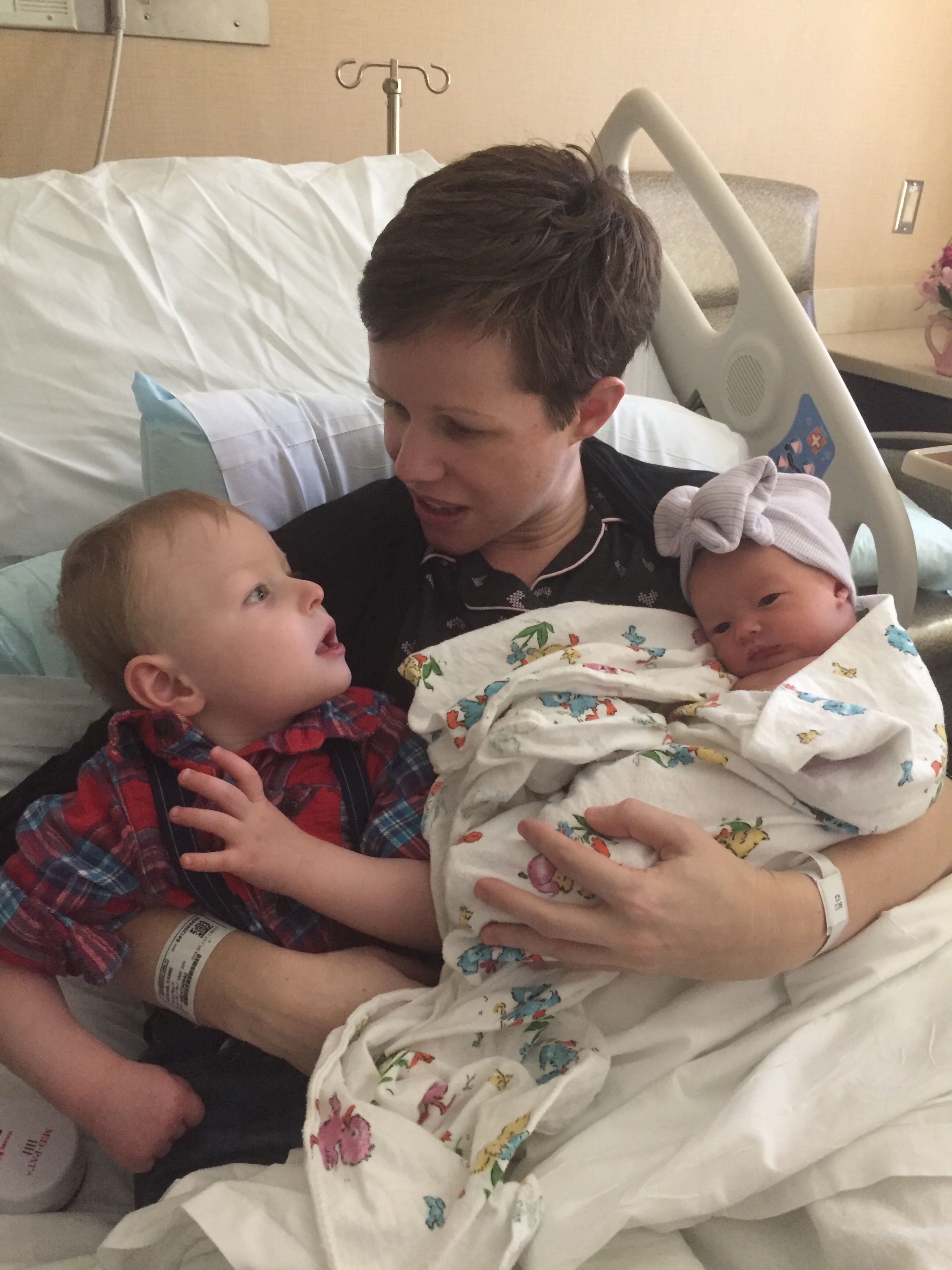
Solly meets Bea with the help of Nana and Papa

Solly, Bea, and Mama

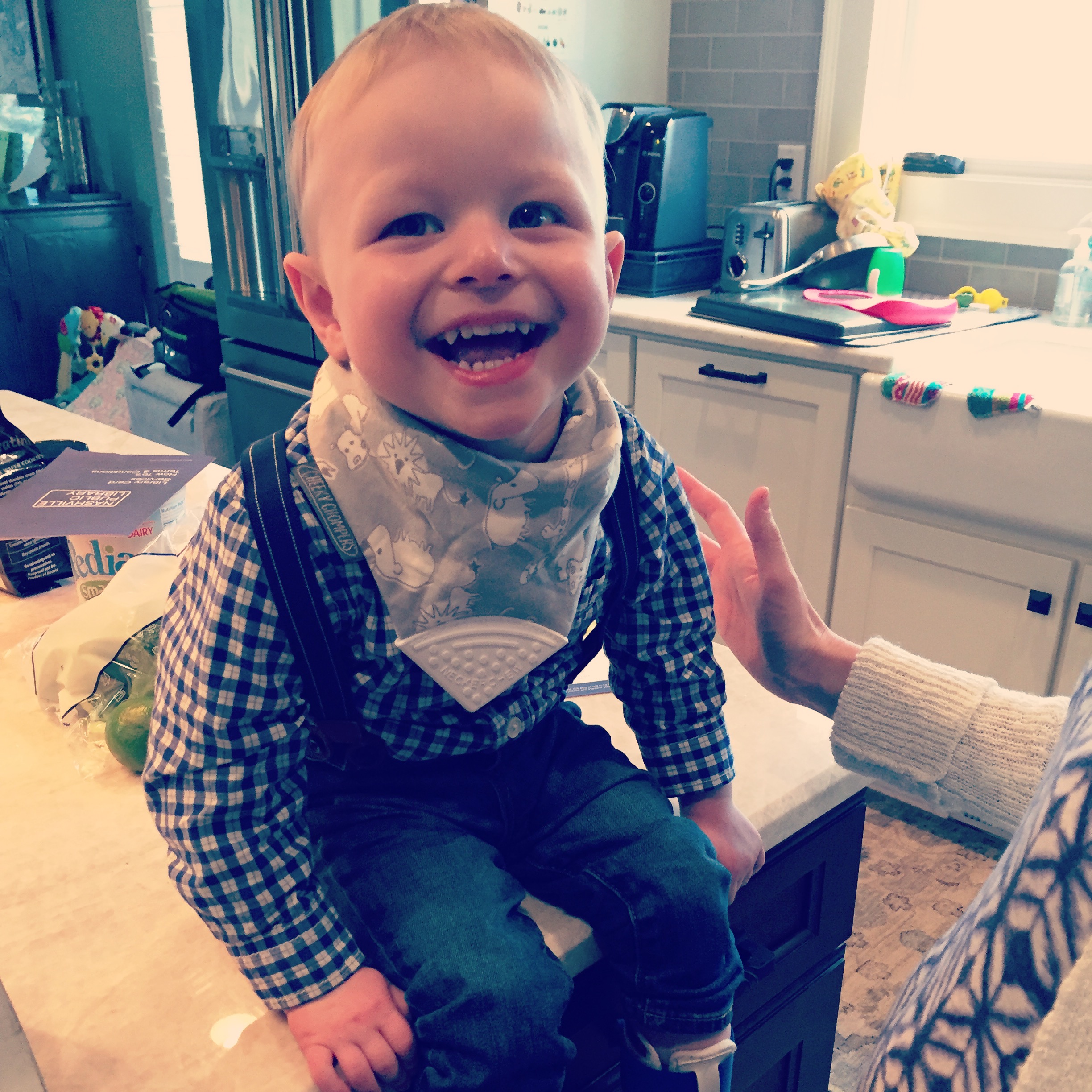
Working on that sitting stuff – note posture and holding on with two hands!

Our sweet Bea


The Struggle Bus

I’ve been struggling lately. Struggling with worry and anxiety. Letting the what if’s back into my head after they’ve been gone for so long. I worry about Solly not making any more /enough progress, about what will happen if and when we decide to let him start nursery school, what will happen if he never walks or talks or learns how to take care of himself independently. If he doesn’t learn how to walk on his own, will we have to move to a more accommodating house? If he doesn’t talk or can never coordinate his hands with what he’s thinking, can he learn sign language? How will he communicate? There are so many unknown variables in his life that sometimes I just can’t process them all.

Over the past few months, I’ve been spending more time on Facebook support groups, trying to research what others are doing to help their children keep progressing. I’ve come up with a number of new things for Solly to try, but I also see other children making so much great progress that I start getting down on myself for not doing enough for Sol. Maybe if we do more therapy at home, if we found more hours in the day to work with him, he’d learn to use his right hand or he’d be able to walk independently using a gait trainer. Maybe he’d start talking. Every night, I wake up in the wee hours of the morning with all of these worries running through my head.

But then, as I worry and worry, I start to think back to his time in the NICU. The night after Sol was admitted to the NICU, doctors told us that if he even survived his strokes, he wouldn’t be able to hear, see, eat by mouth, walk, or talk, he’d essentially live his life in a vegetative state. I think about what his MRI looks like – three huge areas of his brain consumed by a daunting black nothing. And then I realize that Sol has already defied so many odds. He’s far from a vegetative state. He’s mobile with his army crawl. He eats by mouth – heck, he even feeds himself and has started drinking from a straw on occasion. He communicates with a nod for yes and a head shake for no. Over the summer, he started sitting independently to play with toys and is well on his way to making an independent transition from his tummy to sitting. And, most importantly of all, he’s loved, he knows he’s loved, and he knows how to show that he loves back. Not to mention that he is a unicorn of children: he is THE most good natured two-year-old I have ever met. And I’m not just saying that because I’m his Mom. He really is! I am one lucky Mama.

I write this post not to garner any pity or to try and get any reassurance about how well Sol is doing. I KNOW he’s doing amazing things and I’m pretty sure that we’ll continue to see gains in areas, even if they are small and unexpected. (And speaking of which, I promise that I will get back to Solly updates soon. As soon as I quit worrying so much, I hope to get back to writing. Although we haven’t hit any major milestones recently, we do have much to tell!) I write this because I know other special needs parents go through the exact same worries and sleepless nights that I do. In fact, one of my good friends who has a stroke warrior that is doing amazing things recently posted similar worries on Facebook, which prompted me to write down my own thoughts. These fears and worries are a part of every special needs parents life, and unless you have a child with extraordinary needs, it’s really hard to completely understand the worry that comes along with this type of parenting. But, for any special needs parent reading this post, know this: you aren’t alone. I get what you’re going though – I really do, and so do so many others. My advice to you is to live in the moment. Focus on daily smiles and victories. Try really hard to think about the good stuff and all the barriers your child has overcome. You might just realize that things don’t look as bad as you initially thought and no matter what the future holds, you will get through that uncertain future and make it your own. I promise you – it will be ok.

One of the things I’ve heard so many special needs parents say about their kiddos is that they now have a deeper appreciation in life. When I first heard this, I didn’t get it, but in recent days, I’ve found this sentiment to be true. I find that I no longer fret over the petty, silly stuff of life. Things that used to be such a big deal just aren’t any more. Now, life is all about laughter and finding our happy – and that makes for a pretty good life.

And because no post is complete without pictures, here’s a glimpse into our life lately:

If You Don’t Have Anything Nice to Say…

IMG_3134

Working on standing at my toy bin (Completely unrelated to this post!)

The other day, someone’s words completely devastated me.

Here’s how the conversation went:

SCENE: Walgreens
SETTING: Standing in line at the cash register. I have Solly on my left hip and am dancing and singing with him to whatever music is playing while balancing my purchases on my right hip. As I get closer to the front of the line, the cashier starts commenting on how cute Solly is. And then, as she starts ringing up our items…

Cashier: “Is he going to be artistic?” (Note: this is what I heard. It may not have been accurate.)

Me: “I think so.” (With a smile, thinking about how the creative side of Sol’s brain is far less affected.)

Cashier: “He reminds me of my grandson. He’s artistic, nonverbal – never said a word in his life.” (This is when I start thinking: shoot, I totally misunderstood her. She said autistic.)

Me: “Oh, well, Solly has cerebral palsy…”

Cashier: “So does my grandson. He lives in a special home.”

That was the gist of the conversation. I smiled politely as she told me a little more about her grandson and thanked her as we left. Admittedly, it took a little while for the shock to set in and it took even longer for me to realize exactly why this conversation made me feel like someone had knocked the wind out of me. After texting with two other Moms of stroke survivors (also known as my support team), I figured out why it bothered me so much. She had labeled my son after observing him for less than a minute. Because he was interested in the lights, because he is 19 months old and unable to stand or walk, because he does not yet speak, he reminded her of his grandson who has cerebral palsy, is autistic and nonverbal, and lives in a home. She made a snap judgment and shared it with me, making me drastically rethink what Sol’s future held for him.

Here’s the thing: if that is how Solly’s life turns out, so be it. We will figure out how to live with that type of conclusion.

However, keeping that kind of ending in my mind completely removes all the steam I have in my engine, the steam that keeps me getting up each morning and taking Solly to therapy, urging his brain to continue to make new connections. My goal for Solly is, one and most importantly, for him to feel loved and be happy, but, two, I also want him to live as productive a life as he can. And in a short conversation, that woman took away all of the hope I have for my son. I’m sure she thought she was being helpful and was just making polite conversation, but ever since I had this conversation with her, I haven’t been able to think of his future in the positive way that I usually do. It is amazing how someone’s words can affect you so deeply.

Here’s the thing I realize after reflecting on this brief moment: we are so quick to label each other based on short observations. We may share those labels with the other person as that woman did with me, we may share it with others, or we may keep it to ourselves. Labelling anyone without living in their shoes is something that most certainly should not be done, and especially shouldn’t be shared. She has no clue as to any of Sol’s background, how hard he works at therapy, how smart he is.

Nobody knows how any part of life will turn out for anyone. The most we should say to one another is words of encouragement, and instead of labeling each other with the worst case scenario, label each other with goodness, purpose, and promise, and nothing else.