Augmentative and Alternative Communication

Even though one of Sol’s strokes completely wiped out his speech center, speech is one thing that I never worried about as much as I did gross and fine motor skill development. He’s always been behind in speech, especially expressive speech, but it’s one area where we continue to see gains, even if it’s just a new sound. Before Sol’s first birthday, I met with a neuro-developmental researcher who was studying speech development after stroke and much of her research found that if one area of the brain was damaged, its mirror would take over the skills typically assigned to that section of the brain. Because the right side of Solly’s brain had much more healthy brain tissue than the left, she assured me that the right side would likely rewire to house his speech.

To date, Solly has few consistent words other than “hi” “bye bye” and “dada”. He continues to experiment with new sounds, showing new control over his tongue, particularly after our recent hyperbaric oxygen therapy. Yet, because he has difficulty with motor control and has a hard time with sign language, we find it hard to know what he wants. His inability to communicate with us pushed us to want to find other means of communication, so when our developmental pediatrician suggested an Augmentative and Alternative Communication (AAC) device evaluation, we jumped at the opportunity.

img_4267

Playing on the iPad. Easiest evalation ever!

Last Friday morning, Solly and I got up bright and early for an 8am evaluation at the Vanderbilt Bill Wilkerson Center. We met with a very sweet speech therapist who sat down and asked about Solly’s schedule, how he is communicating, what he likes to do the most, and what his gross and fine motor skills look like. She also asked about the speech therapy that we’d done in the past year and learned about our foray into AAC, which has consisted of a Big Mac button, a Twin Talks device, and communication via simple pictures. We also talked about the simple signs that Solly knows (“all done” and “more”) and the words he uses consistently.


img_4264

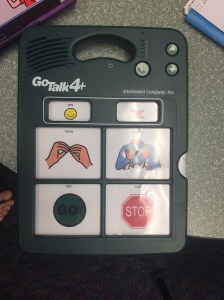
The GoTalk 4+

Then, for the next hour, the speech therapist played with Solly. They played music games on an iPad, worked with simple low tech communication devices, and high tech communication devices that looked very similar to an iPad. Afterwards, she explained to me that she was looking at how he used his hands to make selections on the devices, how he organized his motor skills to make those selections, and how he made selections when the device was placed on his left side versus his right side. Based on her findings, she suggested we start with a low tech communication device similar to the GoTalk 4+ or GoTalk 9+, thinking these would be a good way to start communicating with Solly until he’s ready for a more high tech device or until he’s able to speak on his own.

Next week, we start with a new speech therapist at High Hopes in Franklin. After we meet with her and set Solly’s goals, we’ll buy or borrow a low tech device and get started communicating (better) with our kiddo. We’re excited to see where this goes!

On Vision and HBOT

For those of you who have been following our blog since the beginning, you might remember my constant worry over Solly’s vision. Sol was born with his eyes somewhat stuck looking towards the left. A part of the initial prognosis given was that he could be blind. (Note to Mom’s new to a pediatric stroke diagnosis: take the first prognosis, however grim it may be, and consider it only a possible outcome. Your child CAN and most likely WILL do much more than doctors believe he or she will after a stroke.) Even after rigorous vision therapy, we still got diagnoses – from several different doctors, many giving conflicting thoughts – of delayed visual maturation, CVI (cortical vision impairment), strabismus, nystagmus, possible visual field cut, possible double vision, and so on. With all these possible diagnoses swirling around us, even though it seemed that Solly was compensating well for whatever vision issues he had, we couldn’t be sure how well he was seeing. It was always a point of major frustration.

With hyperbaric oxygen therapy (HBOT), we had read of many children having improved vision after a full course of treatment. In our own experience, we saw many instances where Solly was interacting with his surrounding environment in ways we’ve never seen before, thinking that maybe it helped his vision and helped his brain make new connections as a result. But whenever we think Solly is interacting in new ways, we question IF he is and WHAT, if anything, helped his brain make those connections. We try so many things that we can’t always be sure what move was the right one.

However, after an appointment with Sol’s developmental optometrist earlier this week, we are no longer questioning these new connections: HBOT did, in fact, help Solly’s vision.

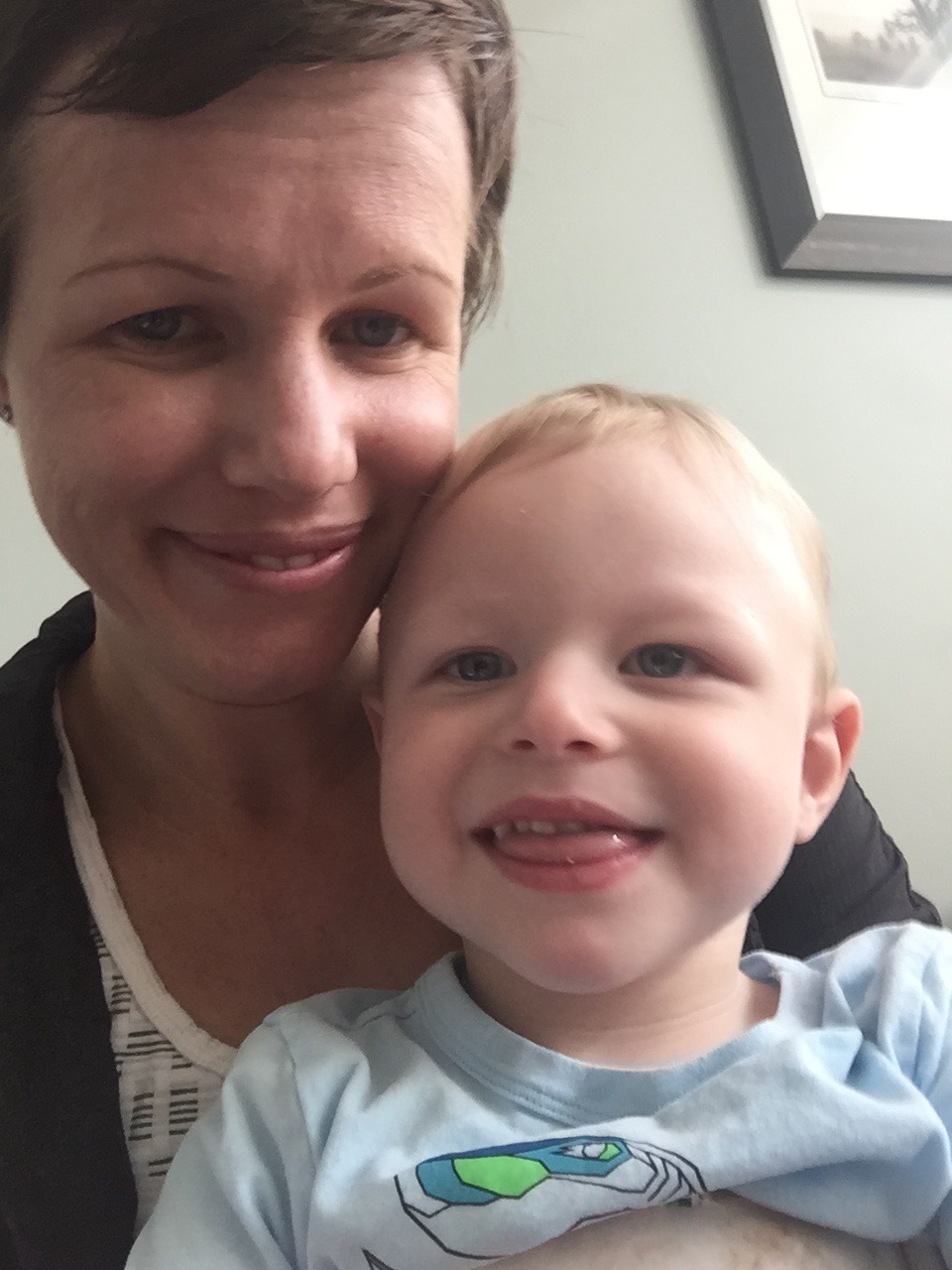
Amusing ourselves at an early morning optometry appointment


This past October, at our last appointment with our optometrist, he ran a test on Sol where he set up sensors on his head and had Solly watch a series of images flash on a screen. The sensors provided data into what Solly was seeing and how well his brain was processing the images. We were delighted when the results came back as “within normal limits.”

This week, we saw the same doctor for the first time since October and he ran the same test. After he examined Solly’s eyes, he told me that his vision had improved even more in the past 8 months. He asked if we’d been working hard on our home vision therapy exercises. I said, no, we simply just try to expose Solly to as many new environments as we can, but that we’d also done a full treatment of HBOT and thought that had a great impact on his vision. His optometrist not only agreed that HBOT had helped but he also encouraged us to do another round of treatment as our schedules allowed. We will continue to be followed by Solly’s optometrist every 6 months, but right now, no need to worry about glasses, patching, or surgery at this point. 

We’ll count this news as one big win for HBOT!

Hippotherapy

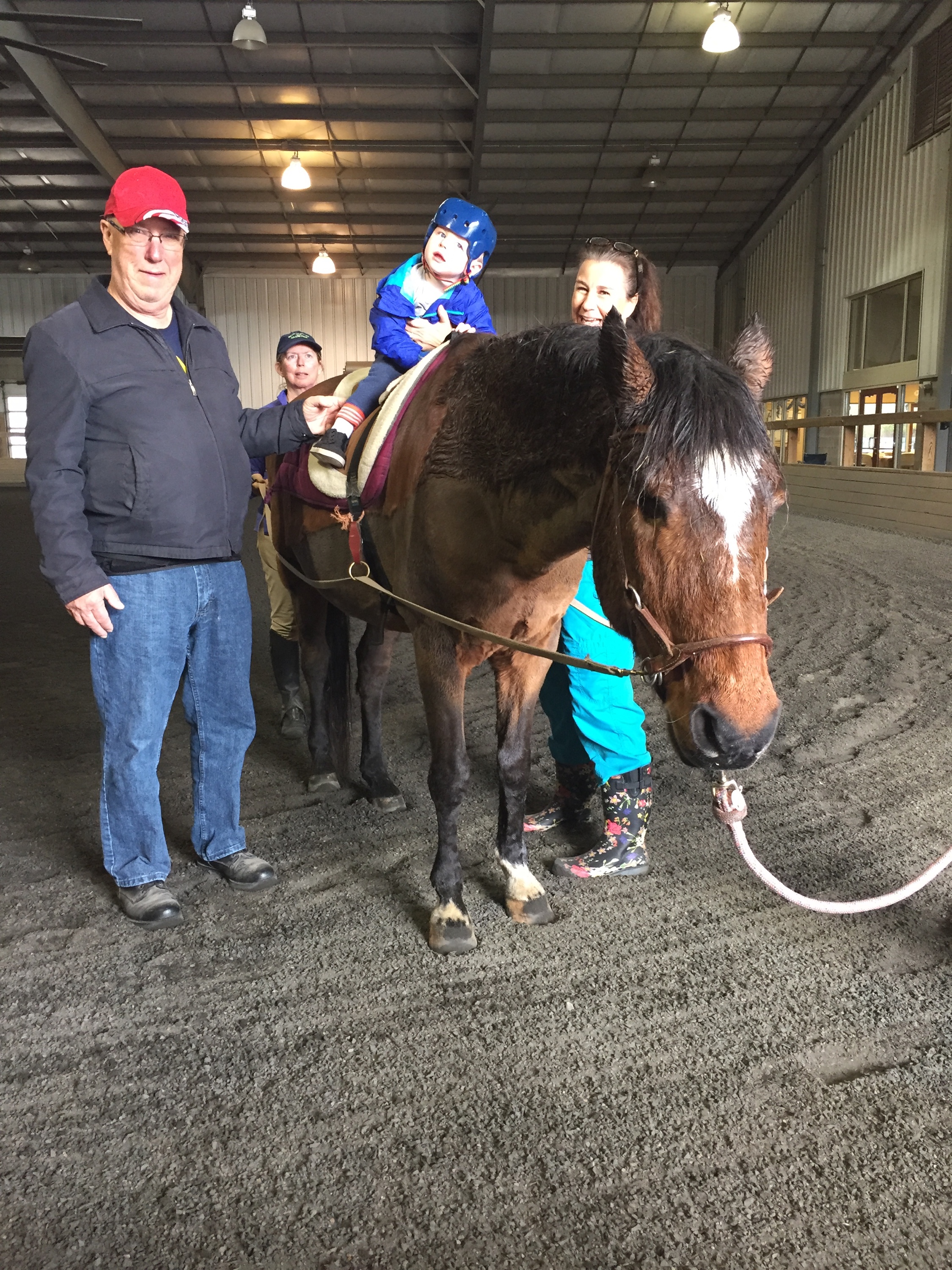
Three weeks ago, Solly had his first hippotherapy session. Ever since Solly turned two, the age when children are generally allowed to start horse therapy, I have been anxious to get him on a horse.

In December, he had an evaluation at Saddle Up!, a therapeutic riding center in nearby Franklin. In the short 20 minute evaluation, I got a clear picture of how beneficial hippotherapy could be for him: he smiled and giggled while on horseback as the horse moved at a walk, halted, and circled. Though it may not seem like those simple actions are doing much, they are, in fact, building much-needed core strength, balance, and movement patterns in Solly’s body and brain. Unfortunately, at the time of our evaluation, Saddle Up! was undergoing some therapy staff changes and as much as the physical therapist who completed Solly’s evaluation wanted to begin treating him, there simply wasn’t a spot for him and he was placed on the waiting list. Surprisingly, there are only two therapeutic riding centers in Nashville: Saddle Up! in Franklin is a quick 20 minute drive and Full Circle Therapy in Smyrna is a much father trek. I preferred to not spend too much time driving to and from therapy appointments so I considered Saddle Up! our only option.

Solly’s evaluation at Saddle Up!

Fast forward six months, in the recovery room for Solly’s SPML surgery, his orthopedic surgeon told us the best way for his hips to rebound and strengthen after surgery is to think of putting him on a horse. I’m sure he meant this figuratively – creating a horse shape between his legs, especially any time he is out of his brace. For those of you who know me personally know that I’ve always been a horse-crazy nut, so a light went off in my head as the doctor said this and I took him quite literally – it was time to get Solly on a horse! I decided extra time in the car was worth the benefits of this type of therapy, so I got in touch with Full Circle Therapy. Days later, we completed Solly’s evaluation and were able to find a spot on his new therapist Jennifer’s hippotherapy calendar. We started immediately.

We are now three therapy treatments in and we’ve have already seen some benefits. I cannot wait to see how Solly continues to thrive with his weekly riding therapy and hear both his and Bea’s giggles when they both get to see Solly’s therapy pony each week.

Solly’s all smiles on Cheyenne, his therapy pony

Inching Along

Dad_and_Sol

First winter in Nashville

Today marks the beginning of our fifth month in Nashville. Four months down and we are finally getting into the swing of things with our therapy schedule. We have 6 weekly therapy appointments: 3 physical therapy (with two different therapists), 1 occupational therapy, 1 feeding therapy, and 1 developmental therapy. We are also being followed by a vision therapist and developmental optometrist every 3 months. Needless to say, combining therapy with our regular doctor and specialist appointments, we are on a strict schedule and are very tired at night!

That being said, every second we spend with therapists, doctors, and on the road to appointments is worth it. We’ve seen lots of tiny developments in all areas that are beginning to add up into bigger gains.

Pudding

Pudding is so yummy!

Quite literally, Solly is gaining weight! I wrote quite a bit last year about his stressful weight plateau and how we weren’t given any answers or solutions. Apparently, a weekly session with a feeding therapist is all we needed. Now, feeding is no piece of cake – I suspect Sol has some sensory issues that are contributing to this – however, he is consistently eating three small meals a day and drinking three bottles. He’s even trying a bit of table food, with french fries, chocolate pudding, and pancakes now his favorite foods. It might not sound like much, but this is a huge victory for us. More importantly, Sol has put on at least 4 pounds since we’ve lived down South, moving up in size from 9 month clothing to 18 month.

Another major gain has been learning to use his right arm. Many of our goals in OT include a stronger and engaged right side, so this has been much of our focus in our weekly sessions. When we moved to Nashville, Sol wasn’t sure how to engage his right arm or hand at all, so it typically hung at his side at all times. Now, he’s not only raising his right arm to give a fisted high five, but he’s also raising it to bat at toys. Take a look:

We hope to start some version of CIMT (Constraint-Induced Movement Therapy) this year to continue to increase the use of his right arm and hand.

When it comes to gross motor skills, Sol has made the most gains. Our therapists have added some new tools to our toolbox, which have made quite the different in his tone, strength, and skills.

Grocery_cart

Sitting up tall

For sitting, we purchased a GoTo Seat, which supports Sol enough to sit independently. While it does not make his trunk stronger (which is what we really need!), it gives him a feeling of confidence and independence to sit and play with toys alone. This paired with trunk strengthening activities in PT have made him much stronger. He’s now sitting independently using an arm to prop himself up and can now sit in a grocery cart all by himself, which he loves!

Stander

Stander time

We’re also starting to use a stander. A stander is exactly what it sounds like: it helps kiddos stand. Independent standing helps with developing hip joints, bone density and leg strength, but for kids with CP who are delayed in this milestone, like Solly, there is a risk of hip dysplasia and other impairments. Luckily, a stander will help Sol develop strength, density, and proper alignment, and it will also help decrease muscle tone. While we’ve ordered our own, we are still waiting for insurance to approve its necessity. Fortunately, United Cerebral Palsy of Middle Tennessee has a neat program called the Equipment Exchange that loans out used equipment, and we were able to borrow a stander from them. Sol now spends about 40 minutes a day playing in it.

Gait_trainer

Moving right along

Most 15 month old children are up and walking on their own. While we are working on each milestone in chronological order, we also try and expose Sol to things typical 15 month olds are doing. Since he isn’t strong enough to walk on his own yet, we’ve begun teaching him how to walk using a gait trainer. It is similar to a walker, but it also includes lots of ways to support his weak trunk. At least once a week, we get Sol into a gait trainer and go through the motions of getting his legs through a reciprocal movement. He doesn’t quite have the hang of it yet, but he will try to move one leg forward a couple of times each session.

Finally, and most exciting, is seeing all of Sol’s hard work come to fruition. Last weekend, we watched as he figured out how to put one arm in front of the other and pull his body forward completely independently. There is no better feeling than watching him learn a new skill and then run with it! Here is Solly’s version of an army crawl:


Meant To Be

The second we moved to Nashville, it was clear that we were meant to be here. After almost a full year of medical struggles where it felt like we were always working to get on one doctor’s calendar or fighting the guidance of another, once we got to Nashville, everything sort of just started to fall into place. Even our trip to the DMV was a breeze!

We largely timed our moved around the availability of Sol’s new neurologist, who, after receiving a referral from our DC neurologist, was able to fit us into her schedule on October 1st. We packed up our home in DC on September 29th and travelled (me and the pups by car, Mike and Solly by plane) to Nashville on the 30th.

At our neuro appointment, we were referred to a physiatrist (in short, a movement doctor who will follow Solly for all of his childhood). This particular physiatrist typically has a 3 month waiting period to get on her schedule, but the day after our neuro appointment, I received a call from the physiatrist’s office saying they had a cancellation for the following week and would I like that appointment? Yes, please! The physiatrist then referred us for evaluations by physical, occupational, and speech therapies, as well as an appointment with another hard-to-book neuro ophthalmologist. We saw the neuro ophthalmologist only days later, thanks to another cancellation, and even though a friend warned that it’d likely be several months before we would be seen by the therapy department, we had all of our evals and were on a regular therapy schedule within two weeks of arriving in Nashville. We couldn’t have asked for a smoother transition!

Here’s a quick update on where we are on the medical side of things:

Neurology

Sol’s neurologist is an amazing woman. Our first appointment with her was so unlike our previous neurology appointments where everything seemed like a guessing game. (In our last neuro appointment in DC, the doctor said she was “nervous” about ever taking Sol off anti-seizure meds, even though he’s been seizure-free since the NICU. I’ve gotta say, hearing a doctor say she was nervous without any game plan didn’t give me a lot of confidence!) Our neuro reviewed Sol’s MRI and while she agreed that his damage is widespread and that we’ve got a lot of catching up to do, she wanted to move forward with an EEG to see if he was having any sort of seizure activity. She explained that though he has quite a bit of damage from his strokes, that doesn’t make him any more susceptible to seizures than any other stroke survivor. About 30% of pediatric stroke survivors will develop epilepsy, so there will always be a chance of recurrent seizures.

We went into Vanderbilt Children’s in early November for his repeat EEG. It stirred up so many horrible memories of our time in the NICU, where it seemed that he was always hooked up for an EEG which typically meant that we couldn’t hold him. Awful stuff. This time around, Sol was, at first, irritable when the tech affixed the sensors, but we were able to get his mind off of it with songs and toys. The EEG involved seeing how his brain responded to a series of blinking lights, how it was at rest, and how it reacted to falling asleep and waking up. Solly was a trooper and we were done with the EEG in about 45 minutes. Easy peasy! The best part was receiving a phone call from his neurologist 3 days later, saying he should zero seizure activity and his EEG looked great. His left side showed delayed responses, which, given the majority of his damage is there, makes sense and isn’t surprising. Our plan is to start weaning him off of Keppra (his current anti-seizure med) in the Spring was cold/flu season is over. Our next follow up with Solly’s neurologist is in January.

Physiatrist
I was excited to meet our physiatrist. This is the one doctor I always wished we had in DC, but no one ever connected us with one. Basically, our physiatrist oversees all therapy and makes sure Sol gets exactly what he needs to support his development. Our first appointment with her consisted of a general evaluation of what he’s doing and how he’s moving, and what other doctors we needed to see now that we are in Nashville. Now that his physiatrist got us synced up with all therapists, the ophthalmologist, and a nutritionist, we are seeing her once again next week for an update. It’s obvious that this doctor has loads of experience and I really look forward to seeing her on a regular basis.

Neuro Ophthalmologist 
Sol’s new neuro ophthalmologist took a look at Sol’s dilated eyes and told us what we already knew: the structure of his eyes is perfect, it’s possible he has a visual field cut (think: partial vision loss on one side), and he may also have strabismus. What’s nice is that he wants to wait and see how Sol’s vision develops before coming up with a solid plan of attack, so we don’t need to see him again for another year or two. I do, however, still have some concerns about how his vision is slowing down his gross motor development, so I may push to see another vision specialist sooner than that.

Nutritionist
The last of Sol’s specialists that will be following Solly is a nutritionist. You may recall that we’ve had quite a bit of trouble with Sol’s feeding over the last 6 – 8 months and this has (had!) been one of my biggest points of anxiety. Luckily, we’ve been having some major success with a feeding therapist (more on that soon), and as we’ve gotten better with eating, she and our physiatrist wanted Sol to see a nutritionist who could help us beef up Sol’s caloric intake. Our nutritionist is a super sweet lady. She walked me through Sol’s growth charts and said what we need to do is get him to gain some weight so his weight and height percentiles are more proportionate. (He’s about 25% for height and 2% or less for weight.) First of all, she took Sol off of Alimentum, thinking that he may not be eating as well because “it tastes like gasoline”, and put him on a high calorie version of Pediasure. Then, knowing that I’m a very goal oriented person, she gave me a target number of ounces he needs to consume every day as well as a daily calorie goal to fatten him up and make up for the weight he didn’t gain over the summer. Fortunately, after a couple of weeks, Sol has really taken to the Pediasure and has put on about 3 pounds since we’ve moved here. We check back in with her in February and I’m hopeful that Sol will continue to add the pounds so that appointment will be positive.

Solly has also been super busy at multiple weekly therapy appointments, but I’ll give a therapy update in our next post.

Thank you for keeping up with Sol’s adventures. We are so grateful for you!